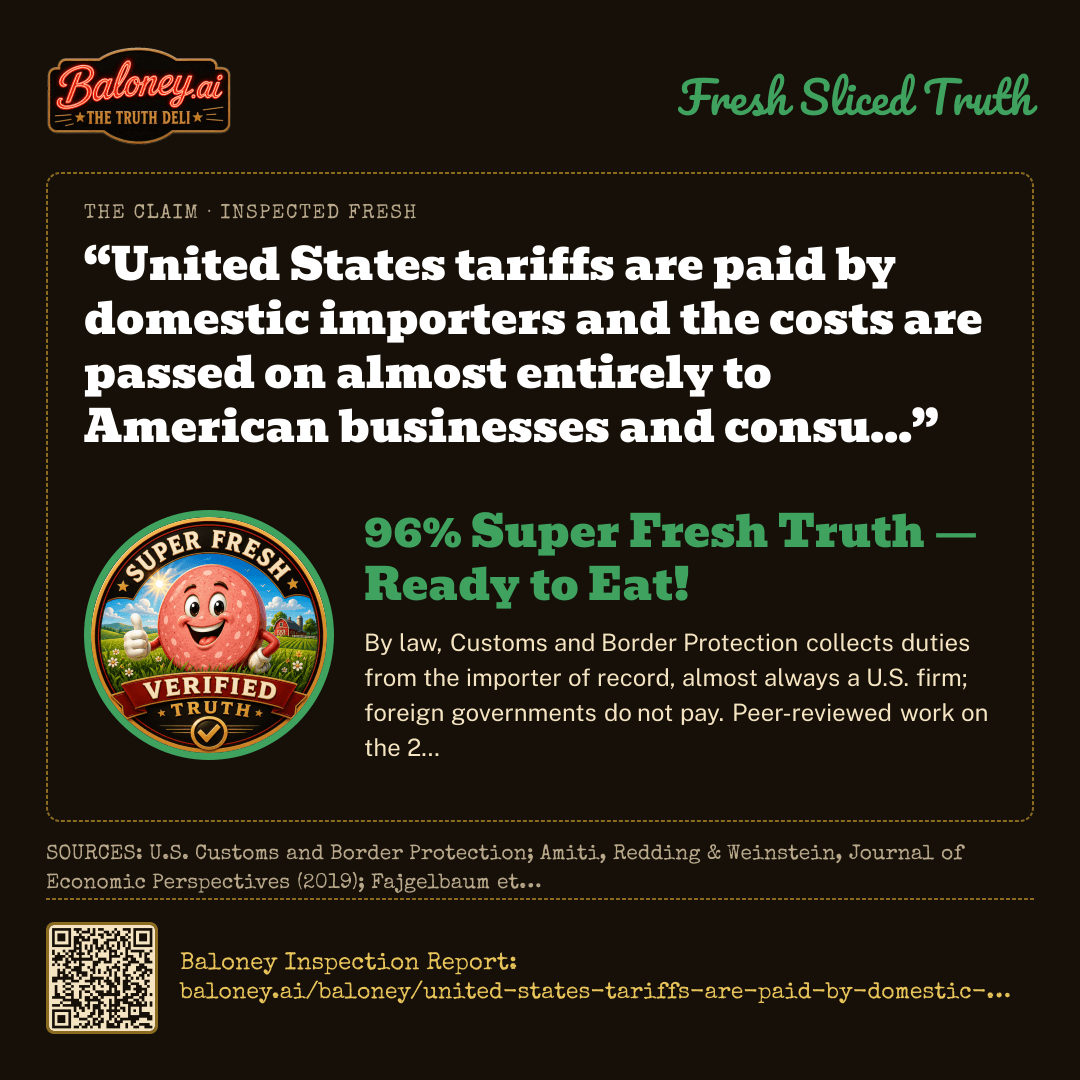
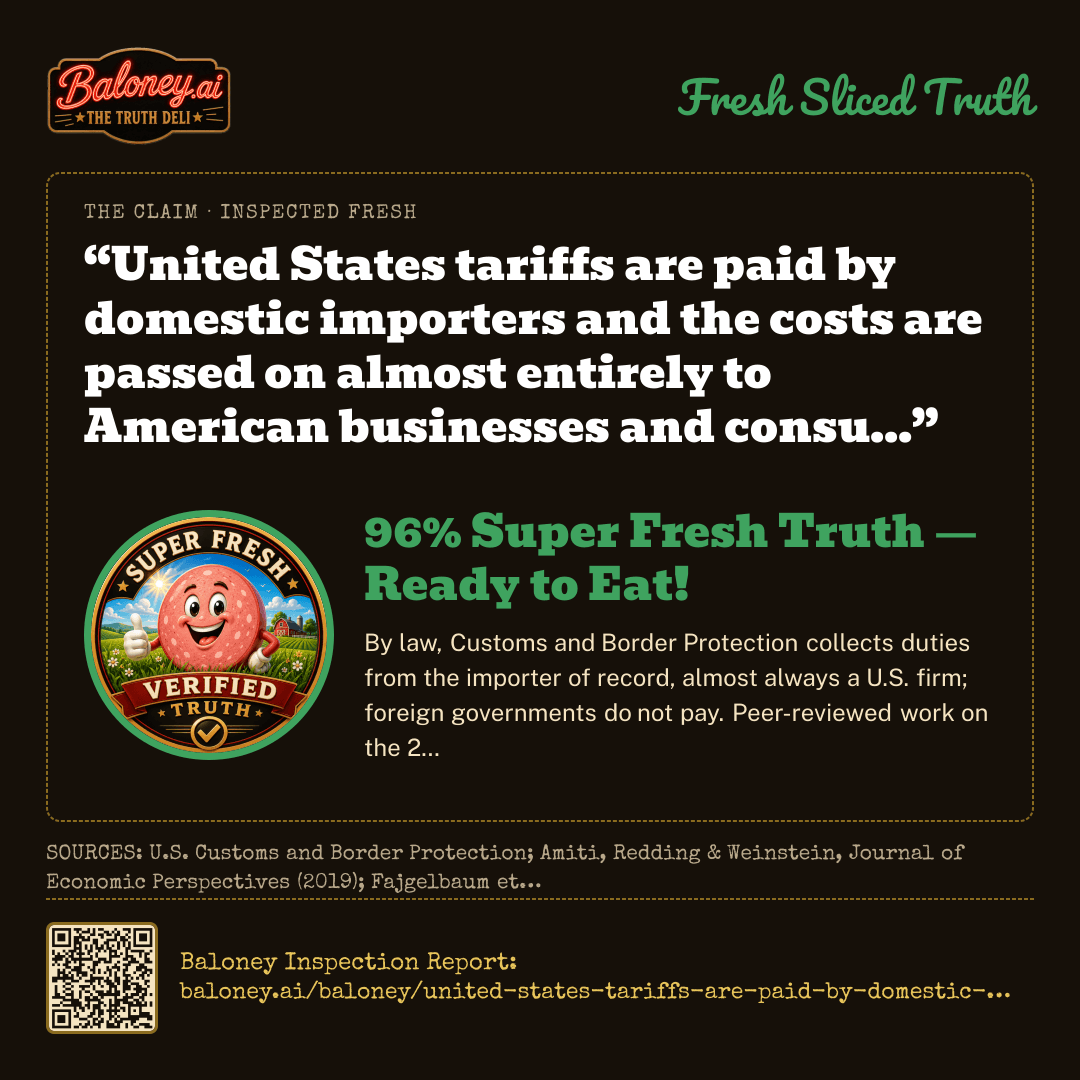
“United States tariffs are paid by domestic importers and the costs are passed on almost entirely to American businesses and consumers.”96% Super Fresh Truth — Ready to Eat!Verified blind by 5 frontier AIs · Baloney Inspection Report: baloney.ai/baloney/united-states-tariffs-are-paid-by-domestic-importers-and
The Rating Card
The claim this refutes
The Baloney Sampler
United States tariffs are paid by domestic importers, and the costs fall on American businesses and consumers rather than foreign governments. U.S. Customs and Border Protection collects duties from the importer of record. The Electronic Code of Federal Regulations and the Congressional Research Service treat the tariff as a tax owed by that importer, not by the exporting country.
Studies from the American Economic Association, the Quarterly Journal of Economics, and the U.S. International Trade Commission found that 2018–19 tariffs passed through nearly one-for-one into U.S. import prices, with little cut in foreign exporters’ pre-tariff prices. Those costs then fell on U.S. importing firms, downstream businesses, and consumers, including through higher retail prices and thinner importer margins.
Other ways to slice it — phrasings that might have changed the rating
“United States tariffs are paid by domestic importers and the costs are passed on almost entirely to American consumers through higher retail prices.” Reports found near-complete pass-through into border import prices but incomplete retail pass-through, with some tariff costs absorbed in U.S. importer and retailer margins.
“Foreign governments and exporters, not American importers, pay United States tariffs.” U.S. customs law makes duties a debt of the importer of record collected by Customs and Border Protection, and foreign governments do not remit the tax.
“Costs of the 2025 United States tariffs were passed on almost entirely into American consumer prices.” Federal Reserve research accepted by the panel found only partial pass-through of 2025 tariffs into retail prices, unlike the near one-for-one border incidence documented for 2018–19.
Written from the panel’s reports by xAI · grok-4.6. Nothing here changed the score.
14:40:06SCORING MODEL V2 — MEDIAN OF 5 COUNTED LAB SCORES: 4, 4, 3, 5, 4 → 4. FRESH RULE: THE PRIMARY MASTER SCORES 4 AND THE BLIND MASTER 4 — BOTH SUPER FRESH TRUTH — AND THE COUNTED MEDIAN IS 4, ON THE TRUE SIDE. PUBLISHED AS 4, THE MORE CAUTIOUS OF THE TWO MASTERS.✓
14:40:06SOURCE RULE — LABS CITED 28 SOURCES: 0 DISCARDED FOR HAVING NO URL, 2 DISCARDED AS DEAD LINKS (404/410), 7 COULD NOT BE OPENED BY US AND ARE MARKED UNVERIFIED.✓
14:40:06SOURCE RULE — PRIMARY MASTER RULED ON 20 SOURCES: 0 DISCARDED FOR HAVING NO URL, 0 DISCARDED AS DEAD LINKS, 5 MARKED UNVERIFIED, 15 VERIFIED.✓
How This One Was Sliced
Station 1 · Blind Inspection — Five Graders, Zero Peeking
Each lab scored the claim independently, without seeing the others. Open a breakdown for its evidence, its sources, and how sure it was.
Anthropic · EQUAL WEIGHT · 62.1s
claude-opus-5
96%TRUTH
ROUND-1 BREAKDOWN
Evidence offered for the claim
Legal/mechanical fact: U.S. Customs and Border Protection collects duties from the importer of record — a U.S.-based business (or its customs broker) — at the time goods enter U.S. commerce. Foreign governments and foreign exporters never remit money to the U.S. Treasury for tariffs.
Amiti, Redding & Weinstein (Journal of Economic Perspectives, 2019) found that the 2018 tariffs were passed through 'completely' into U.S. domestic prices of imported goods, implying the full incidence fell on U.S. importers and consumers, with an estimated aggregate real income loss of roughly $1.4 billion per month by late 2018.
Fajgelbaum, Goldberg, Kennedy & Khandelwal ('The Return to Protectionism,' Quarterly Journal of Economics, 2020) estimated near-complete pass-through of the 2018 tariffs to U.S. prices and found essentially no decline in foreign exporters' pre-tariff prices, i.e., U.S. buyers bore the burden; they estimated ~$51 billion in annual costs to U.S. consumers and importers.
Cavallo, Gopinath, Neiman & Tang (AER: Insights, 2021) documented that tariffs passed through almost one-for-one into U.S. border (duty-inclusive) import prices, with foreign exporters not cutting their dollar prices.
Flaaen, Hortaçsu & Tintelnot (American Economic Review, 2020) found the washing-machine safeguard tariff raised U.S. retail washer prices by roughly 12%, with costs borne by American consumers — including on domestically produced substitutes.
BLS Import/Export Price Indexes (which exclude duties) showed little decline in foreign exporters' dollar prices during the 2018–19 trade war, consistent with foreign sellers not absorbing the tariff.
Tax Foundation and other tax-policy analysts classify tariffs as a tax on American importers that functions as a consumption tax largely borne by U.S. households and firms.
The claim's phrasing 'American businesses and consumers' is broad enough to cover both channels economists observe: margin compression at U.S. importers/retailers and higher retail prices for households.
Evidence against the claim
'Almost entirely' is an overstatement in some episodes: for the 2025 tariff round, private-sector analyses (e.g., Goldman Sachs estimates widely reported in mid-2025) attributed roughly 15–25% of tariff costs to foreign exporters cutting prices, with the remainder split between U.S. firms' margins and consumers.
Exchange-rate movements can shift part of the burden abroad: the Chinese renminbi depreciated substantially against the dollar in 2018–19, partially offsetting tariff-induced price increases for U.S. buyers (an implicit foreign-borne cost), and a stronger dollar has a similar effect.
Pass-through to final retail prices is often incomplete and slow — Cavallo et al. found retail price increases far smaller than border price increases in 2018–19 — meaning the burden falls on importer/retailer margins rather than consumers; some sellers also source from exempt countries, blunting the consumer price effect.
Economic theory and some product-level evidence (e.g., certain steel and specialized inputs) allow for terms-of-trade gains where large-country tariffs do push foreign supplier prices down; empirically small in the U.S. case, but not literally zero.
Foreign producers also bear costs indirectly through lost export volumes, profits, and market share, which the phrase 'almost entirely' to Americans glosses over, even though those losses are not tariff payments.
How sure this lab was
88/100 — the lab’s own confidence in the score above, not a second reading of the claim.
U.S. customs law makes duties a debt of the importer of record to the United States, so the legal payer is the importer, not the exporting country or foreign government. See 19 CFR §141.1 at https://www.ecfr.gov/current/title-19/chapter-I/part-141/section-141.1.
The Congressional Research Service describes tariffs as taxes on imported goods and explains that they are collected from importers, supporting the first half of the claim. See https://crsreports.congress.gov/product/pdf/IF/IF11030.
FactCheck.org, assessing claims that China pays U.S. tariffs, concluded that tariffs are paid by U.S. importers and that businesses commonly pass the costs along to consumers through higher prices. See https://www.factcheck.org/2019/05/trumps-dubious-claims-about-china-paying-tariffs/.
Amiti, Redding and Weinstein’s NBER paper on the U.S.-China trade war found that U.S. tariffs were passed through largely/almost entirely to U.S. firms and consumers, with foreign exporters absorbing little of the cost in prices. See https://www.nber.org/papers/w26610.
Fajgelbaum, Goldberg, Kennedy and Khandelwal’s peer-reviewed QJE study found U.S. import tariffs were passed through to U.S. domestic prices, while losses to consumers and importing firms outweighed gains to protected firms/workers. See https://academic.oup.com/qje/article/135/1/1/5626442.
The U.S. International Trade Commission’s 2023 review of Section 232 and Section 301 tariffs found that the tariffs raised prices of covered imports and affected downstream U.S. industries, consistent with much of the burden falling on U.S. businesses and consumers. See https://www.usitc.gov/publications/332/pub5405.pdf.
Evidence against the claim
The wording 'passed on almost entirely to American businesses and consumers' is broadly supported for recent U.S. tariffs, but it is an incidence claim, not an accounting fact. Some importers, wholesalers, or retailers may absorb part of the tariff through lower margins, especially in the short run.
Cavallo et al. found near-complete pass-through of recent tariffs into U.S. import prices at the border, but more mixed pass-through into retail prices; some large retailers absorbed tariff costs rather than immediately raising consumer prices. That caveat weakens an absolute reading that consumers personally pay almost all tariff costs. See https://www.aeaweb.org/articles?id=10.1257/aeri.20190536.
Tariff incidence can vary by product, market power, contract timing, exchange rates, supply-chain adjustments, and demand/supply elasticities. In some cases foreign exporters may cut pre-tariff prices or U.S. firms may change suppliers, so the statement should not be read as a universal law for every tariffed good.
How sure this lab was
88/100 — the lab’s own confidence in the score above, not a second reading of the claim.
By U.S. law, tariffs are a tax collected by U.S. Customs and Border Protection (CBP) directly from the domestic 'importer of record.' Foreign governments and foreign manufacturing firms do not pay the U.S. government.
Multiple empirical studies on the 2018-2019 trade war, including major papers published by the National Bureau of Economic Research (NBER) and the American Economic Association, found a near 1-to-1 passthrough of tariff costs. They concluded that foreign exporters generally did not lower their border prices, meaning the total cost of the tariffs was paid by U.S. importers.
A March 2023 statutory report by the U.S. International Trade Commission (USITC) analyzed the Section 232 and Section 301 tariffs and confirmed that the costs were passed on almost entirely to U.S. importers, leading to increased costs for U.S. businesses that rely on imported components and higher prices for American consumers.
Evidence against the claim
While the physical payment of the tariff is made by the U.S. importer, the theoretical economic burden (incidence) can be shared if foreign exporters lower their prices to maintain market share. While empirical data shows this was rare in recent U.S. trade conflicts, a small subset of specific industries saw foreign suppliers absorb a fractional amount of the tariff.
Macroeconomic adjustments, such as the depreciation of a foreign currency (e.g., the Chinese yuan depreciating against the U.S. dollar), can indirectly offset some of the cost for U.S. buyers. In these cases, the foreign exporting economy experiences economic friction, even though they do not write a check to the U.S. government.
Some American businesses choose to absorb the higher import costs by reducing their own profit margins rather than passing 100% of the cost to the final retail consumer, though the cost is still borne by an 'American business' as the claim states.
How sure this lab was
98/100 — the lab’s own confidence in the score above, not a second reading of the claim.
U.S. tariffs are legally paid to Customs by the domestic importer of record, not directly by the foreign government. Studies of the 2018–19 tariffs found nearly complete pass-through into the tariff-inclusive prices paid by U.S. importers, indicating that U.S. importers bore almost all of the border cost.[2][3]
The U.S. International Trade Commission review summarized by PolitiFact found that tariffs were paid primarily by U.S. importers while prices received by Chinese exporters were largely unaffected. It also found that importers passed most or all of the costs to consumers or U.S. producers using Chinese inputs.[7]
Federal Reserve research found that 2018–19 tariffs were passed through fully and quickly to consumer-goods prices, while the Boston Fed found that small-business importers generally expected to pass a substantial portion of tariff-related cost increases to consumers.[2][8]
Evidence against the claim
The phrase "almost entirely to American businesses and consumers" is too broad if interpreted as an immediate, dollar-for-dollar burden on retail consumers. Recent Federal Reserve estimates for 2025 tariffs found retail-price pass-through of about 15% using realized tariff rates, or about 20% under a broader exposure measure.[9]
A New York Fed study estimated that only about 26% of the 2025 tariff increase passed through to consumer prices relative to less-exposed goods; 64% of that consumer-price effect was direct and 36% reflected higher input costs and increased domestic markups.[1]
Tariff incidence can vary by product, market power, exchange rates, demand, and timing. Historical evidence from U.S. sugar duties found that only about 40% of tariff increases passed through to consumer prices, showing that importers and consumers do not necessarily absorb the entire statutory tariff.[10]
The claim conflates legal payment with ultimate economic incidence. Importers remit the tariff, but they may absorb some cost through lower margins, alter sourcing, reduce imports, or shift part of the burden to foreign suppliers; therefore, "almost entirely" is well supported for some recent tariff episodes at the border but not universally for all tariffs or all downstream prices.[3][10]
How sure this lab was
91/100 — the lab’s own confidence in the score above, not a second reading of the claim.
U.S. customs law requires the importer of record—almost always a domestic firm—to tender duty payments to CBP; foreigners do not remit the tax.
Peer-reviewed analyses of the 2018–19 Section 232/301 tariffs (Amiti-Redding-Weinstein JEP 2019; Fajgelbaum et al. QJE 2020) found tariff-inclusive import prices rose roughly one-for-one with the statutory rates, implying foreign exporters did not cut pre-tariff prices.
U.S. producer-price and downstream input-cost data, plus selected retail scanner studies, show the extra cost appearing in American business costs and consumer prices rather than being absorbed abroad.
Fact-checkers have repeatedly labeled the claim that ‘China/foreigners pay the tariffs’ false on the same legal-plus-incidence grounds.
Evidence against the claim
Optimal-tariff / terms-of-trade theory predicts a large importer can force some burden onto foreign exporters via lower export prices; a few product-level papers estimate 10–30 % foreign absorption.
Pass-through to final retail prices is sometimes incomplete; U.S. importers or retailers absorb part in margins (still American businesses, but not ‘passed on’).
Incidence is not uniform across all historical U.S. tariffs, all products, or longer time horizons once exchange rates, rerouting, and retaliation occur.
‘Almost entirely’ overstates the precision of the empirical range; several studies find high but not 100 % domestic incidence.
How sure this lab was
82/100 — the lab’s own confidence in the score above, not a second reading of the claim.
All five evaluators placed the claim in the substantially-true band (scores 3, 4, 4, 4, 5). The legal half is undisputed: U.S. customs law makes duties a debt of the importer of record, almost always a domestic firm, collected by CBP; foreign governments do not remit the tax. The incidence half is supported by the core 2018–19 literature the panel repeatedly cited (Amiti-Redding-Weinstein; Fajgelbaum et al.; Cavallo et al.; USITC 2023), which found near one-for-one pass-through into tariff-inclusive U.S. import prices and little decline in foreign exporters’ pre-tariff dollar prices. The claim’s phrase ‘American businesses and consumers’ is broad enough to cover both higher retail prices and margin compression at U.S. importers and retailers, so incomplete retail pass-through does not falsify it. Caveats—some product-level foreign absorption, exchange-rate offsets, slower or smaller retail pass-through, and lower 2025 consumer-price estimates—mean ‘almost entirely’ is slightly strong rather than exact, which is why the score is 4 rather than 1. Those caveats are not enough to leave the 1–5 band. High-reliability government, journal, and statutory sources were weighted most heavily; fact-checks and the Tax Foundation were treated as corroborative, not primary.
All five evaluators agreed the legal payer is the domestic importer and that 2018–19 border pass-through was nearly complete, scoring the claim 3–5. They disagreed on how far ‘almost entirely’ should be qualified by incomplete retail pass-through, some foreign price cuts, exchange-rate offsets, and 2025 consumer-price estimates that are lower than the 2018–19 border results.
SUPER FRESH — VERIFIED AGAINST U.S. CUSTOMS AND BORDER PROTECTION; AMITI, REDDING & WEINSTEIN, JOURNAL OF ECONOMIC PERSPECTIVES (2019); FAJGELBAUM ET AL., QUARTERLY JOURNAL OF ECONOMICS (2020); CAVALLO ET AL., AER: INSIGHTS (2021); U.S. INTERNATIONAL TRADE COMMISSION (2023).
Blind Validation Master · never saw the Primary’s work
sonar-pro
96% TRUTH
The statement is substantially true as written, especially for the well-studied 2018–19 U.S. tariffs. U.S. importers of record legally remit duties to Customs, and major empirical studies plus the USITC found tariff-inclusive import prices rose approximately one-for-one with tariff rates, indicating that foreign exporters absorbed little of the border cost. Those costs then fell on U.S. importing firms, downstream businesses, and, in many cases, consumers. However, “almost entirely” should not be read as universal or as meaning that consumers always paid the full amount: some firms absorbed costs through lower margins, retail pass-through varied, and foreign suppliers could bear part through price reductions, lost sales, or exchange-rate effects. The evidence therefore supports a 4 rather than a 5: the core claim is correct, with meaningful qualifications about economic incidence and variation across episodes.
AGREEMENT TEST PASSED — BOTH MASTERS SCORED 96% · BLIND VALIDATION CONFIRMED THIS SCORE · NO RE-EVALUATION REQUIRED
Median of 5 counted lab scores: 4, 4, 3, 5, 4 → 4.
Fresh rule: the Primary Master scores 4 and the Blind Master 4 — both Super Fresh Truth — and the counted median is 4, on the true side. Published as 4, the more cautious of the two masters.
The Evidence
Evidence for the claim
Importers, not foreigners, remit the tax U.S. customs law makes duties a debt of the importer of record to CBP; foreign governments and foreign exporters do not write checks to the Treasury.
Near one-for-one border pass-through in 2018–19 Amiti, Redding and Weinstein (JEP 2019), Fajgelbaum et al. (QJE 2020), and Cavallo et al. (AER Insights 2021) found tariff-inclusive U.S. import prices rose roughly one-for-one with statutory rates, with little cut in foreign pre-tariff dollar prices.
USITC statutory review of 232/301 tariffs The Commission’s 2023 report found the Section 232 and 301 tariffs raised prices of covered imports and were passed on almost entirely to U.S. importers, increasing costs for downstream U.S. businesses and consumers.
Downstream costs and independent fact-checks Producer-price, input-cost, and selected retail evidence, plus FactCheck.org and PolitiFact, show the extra cost appearing in American business costs and consumer prices rather than being absorbed abroad.
Evidence offered against the claim
Retail pass-through is often incomplete Cavallo et al. found retail price increases much smaller than border-price increases; some U.S. importers and retailers absorb part of the tariff in margins. Recent Fed work on 2025 tariffs estimated retail pass-through around 15–26%.
Some foreign absorption in some products Terms-of-trade theory and a few product-level papers estimate 10–30% foreign price cuts; mid-2025 private-sector analyses attributed roughly 15–25% of some new tariff costs to foreign exporters.
Incidence is not uniform Effects vary by product, market power, contracts, exchange rates, and time. Historical U.S. sugar duties showed only about 40% pass-through to consumer prices; yuan depreciation in 2018–19 offset some cost for U.S. buyers.
‘Almost entirely’ overstates precision Several studies find high but not 100% domestic incidence, and lost foreign export volumes are an indirect burden the phrase glosses over—though those losses are not tariff payments.
Sources · Reliability · Why Accepted or Discounted
ACCEPTED — Nonpartisan CRS explainer that tariffs are taxes collected from importers.
Every link was opened when this claim was inspected. A dead link was discarded before publication; “unverified” means the site refused our automated check and the link is the one the panel cited. A source without a URL was never kept.
“United States tariffs are paid by domestic importers and the costs are passed on almost entirely to American businesses and consumers.”96% Super Fresh Truth — Ready to Eat!Verified blind by 5 frontier AIs · Baloney Inspection Report: baloney.ai/baloney/united-states-tariffs-are-paid-by-domestic-importers-and
Support The Truth Deli
Buy The Truth Deli Merch
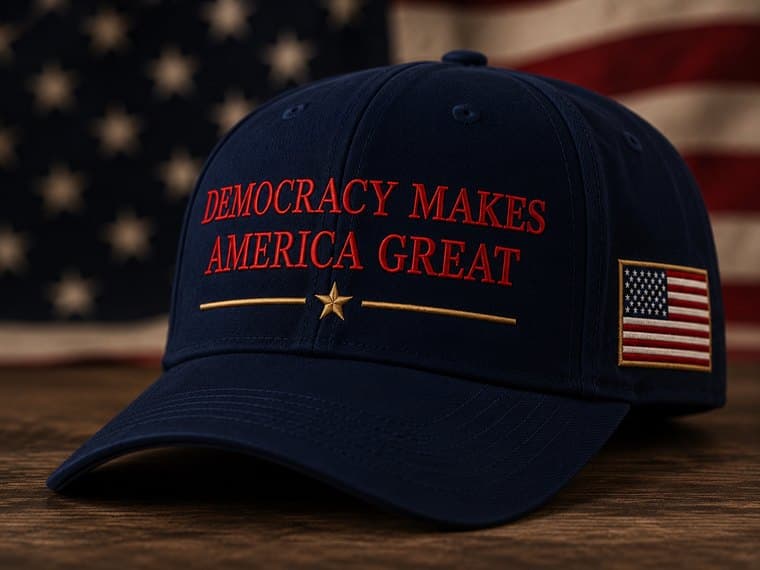
“Democracy Makes America Great”
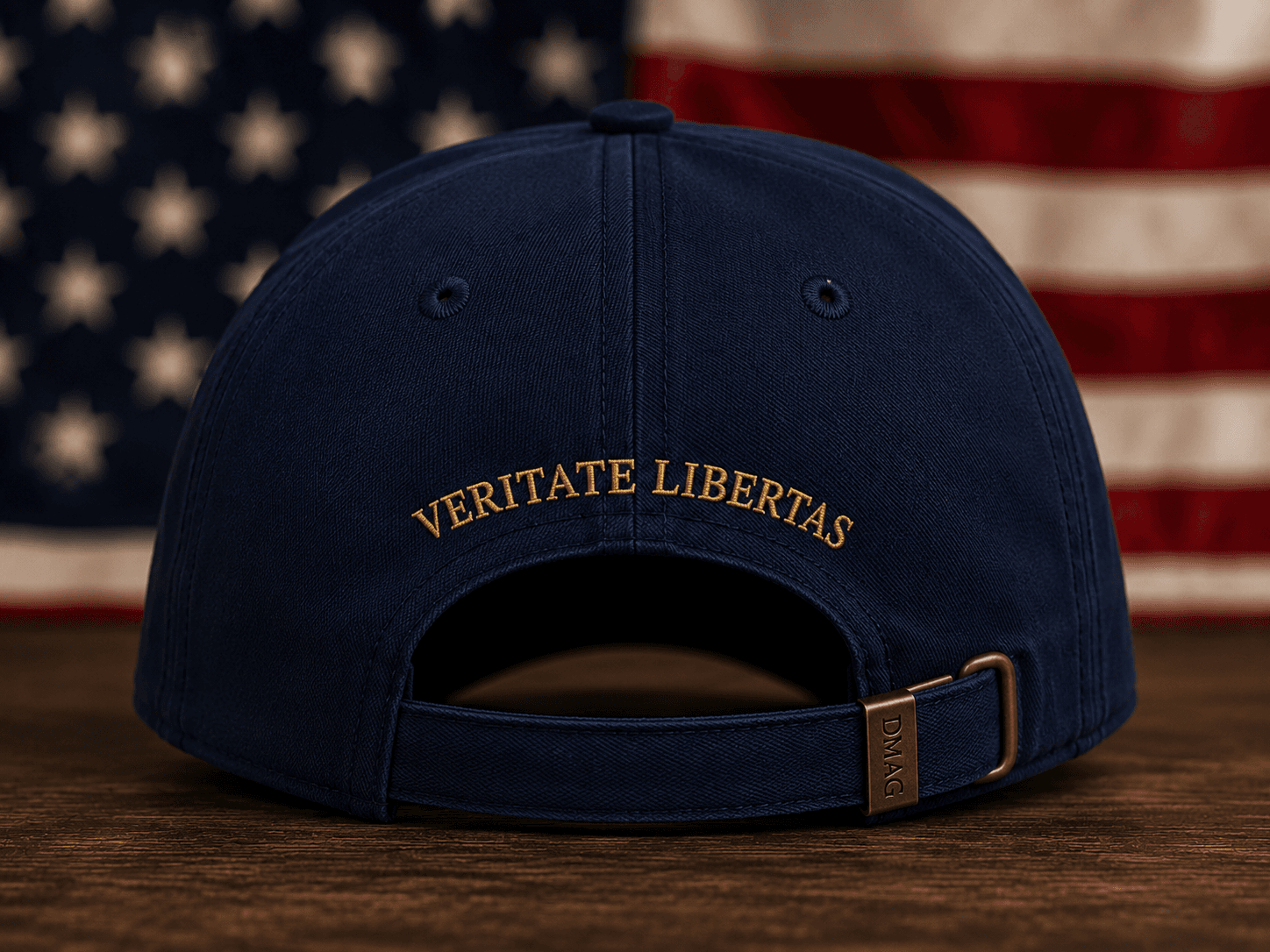
Veritate Libertas — Latin for “Through Truth, Liberty.”
Democracy is what makes America great. But without truth — honest, real, scientifically validated truth — democracy fails. The baloney slicer is on: feeding fresh sliced truth to protect what makes America great. Democracy.